
On this page
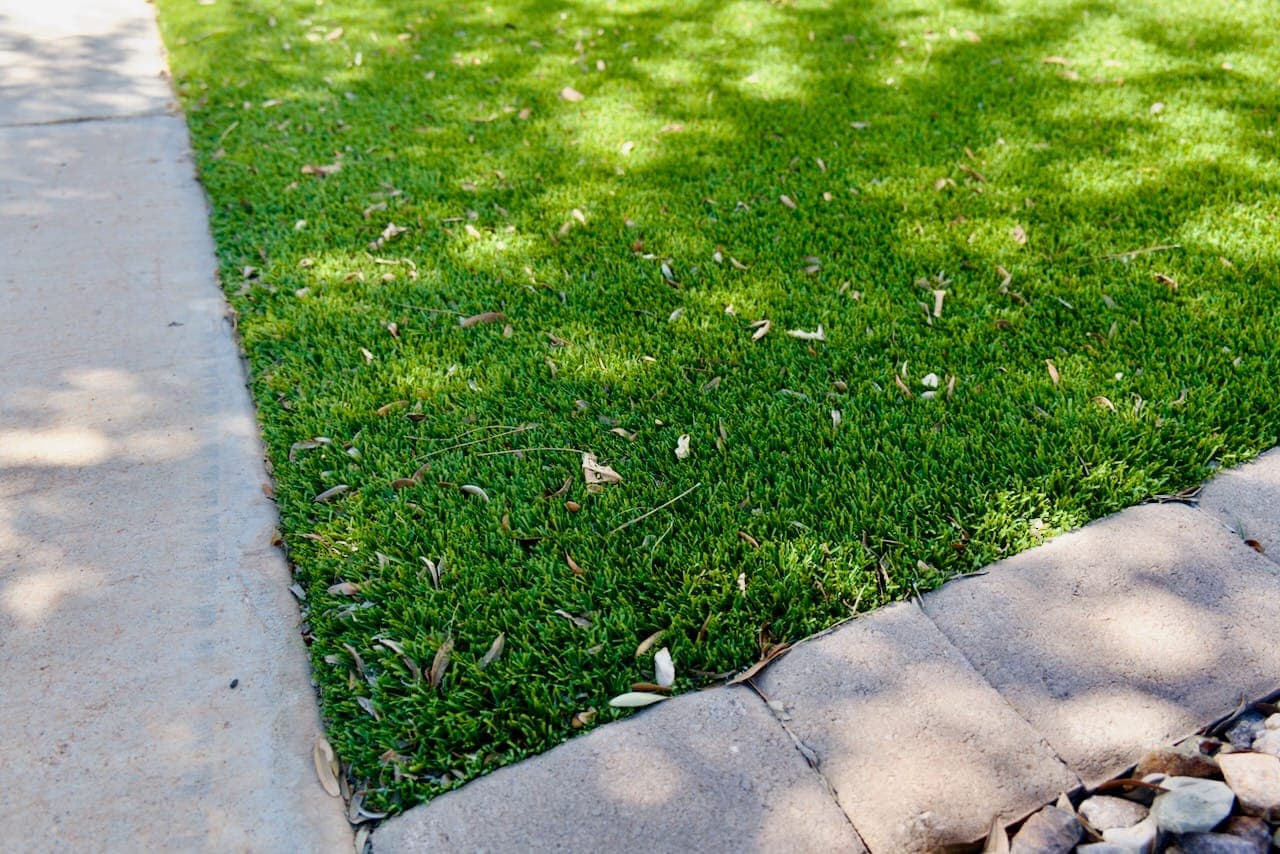
Artificial turf has no universal cleaning interval. Manufacturer examples suggest removing debris and lightly rinsing weekly or every two weeks, grooming monthly or as use demands, and scheduling annual or twice-yearly professional maintenance for many lawns. Yards with pets or heavy traffic may need quarterly professional care.
Use your turf manual and warranty as the baseline. Adjust each task’s cadence to the yard’s use and condition.
Start by defining what “cleaning” means
A quick rinse, monthly grooming, and comprehensive maintenance are not interchangeable. Fake grass collects real dirt, and each problem calls for a different task.
Think of artificial turf maintenance as a ladder:
- Pick up solid waste and remove loose debris.
- Lightly rinse or spot-clean the affected area.
- Brush or groom the fibers.
- Schedule comprehensive professional maintenance when needed.
- Investigate drainage, seams, the base, or other installation concerns separately.
A light rinse removes surface dust and smaller debris. After pet-waste pickup, it can flush residue through permeable backing when the installation drains correctly. Professional maintenance may go further by providing deeper cleaning, grooming, infill work, repairs, or drainage assessment.
A weekly rinse does not mean you need weekly professional service.
A practical artificial turf maintenance schedule
Set an interval for each task, then adjust it to your yard and turf system.
| Care layer | Published starting point | Move it earlier when… | DIY or professional? |
|---|---|---|---|
| Large-debris removal | Weekly or every two weeks in one residential guide. | There are nearby trees or increased leaves, windblown debris, or visible buildup. | Usually DIY with a turf-compatible tool. |
| Light rinse | Weekly in one manufacturer example; another recommends rinsing as needed for dust and smaller debris. | Turf looks dusty or pet-use areas need attention. | Routine DIY care when the turf drains correctly. |
| Pet-area cleanup | Pick up solid waste, then rinse remaining residue where the backing is permeable and drainage works. | The turf manual or actual condition warrants it; dog count and amount of use are relevant modifiers. | Reassess the area or get help if residue or odor keeps returning despite appropriate care. |
| Brushing or grooming | Monthly in published residential examples, adjusted for traffic and use. | Multiple dogs, heavy play, or frequently traveled paths flatten the pile. | Use a suitable brush gently; stop if fibers, seams, or infill appear disturbed. If the pile won’t stay up, see why artificial turf goes flat. |
| Comprehensive professional maintenance | Annual or twice yearly for many lawns in one manufacturer guide. | Pet-heavy or high-traffic yards may move toward quarterly in that same guidance. | Service may include cleaning, grooming, infill work, repair, and drainage assessment. |
| System-required care | Follow the turf manual, installer instructions, and warranty; one U.S. residential warranty requires annual maintenance. | Product-specific requirements differ from generic examples. | Check before using unfamiliar equipment or chemicals. |
These are starting points, not commandments. A quarterly professional schedule does not mean debris removal and rinsing should wait three months.
A low-use yard without pets may fit the longer end of these ranges. A yard used daily by several dogs may need more frequent spot cleanup and grooming, with professional care closer to the quarterly example.
What should shorten your maintenance interval?
Let the yard tell you when the calendar is too optimistic.
Pets, children, nearby trees, shade, scattered leaves, and organic matter can affect residential maintenance needs. Pet-related maintenance also varies with the number of dogs and how heavily they use the turf. Brushing needs generally rise with traffic, especially along repeat paths and in areas used by multiple dogs or active children. Dust, pollen, dirt, and other airborne material create visible reasons to wash the surface.
Move routine care earlier when you see:
- Repeated pet use in one concentrated zone.
- More foot traffic or flattened high-use paths.
- Visible dust, leaves, or other debris.
- Odor returning before the next planned cleanup.
If one dog favors the same corner, that corner may need attention well before the rest of the lawn.
Recurring odor is a reason to inspect the affected zone and reconsider the task or cadence. It is not proof of bacterial growth or a reason to treat the entire yard. If you’re choosing a pet-odor product, see deodorizer vs enzyme cleaners for pet yards.
If you’re deciding whether the next step is deeper cleaning or a sanitizing claim, see what cleaning can and can’t do.
Adjust for Arizona weather events, not an Arizona-only calendar
Triple-digit midsummer high temperatures are normal in Phoenix, but heat alone does not establish a special professional-cleaning interval.
Arizona weather is more useful as an inspection trigger. One documented Phoenix-area monsoon event brought a large dust storm and roughly 50–65 mph winds. Monsoon activity varies by season and location, so an automatic post-monsoon deep cleaning makes little sense.
After a significant dust, wind, or rain event:
- Inspect for deposited dust and loose debris.
- Remove loose material before it settles deeper into the pile.
- Check whether water drains normally.
- Return to the regular schedule if the yard shows no new issue.
A dusty wind event that coats the turf deserves cleanup. A quiet monsoon stretch that leaves the yard unchanged does not demand ceremonial deep cleaning simply because the calendar says September.
Signs to clean, and signs to investigate
Not every ugly symptom means the turf is overdue for cleaning.
| Clean or groom now | Investigate further |
|---|---|
| Visible dust or loose debris. | Water pools or drains differently than usual. |
| Pet residue remains after waste pickup; use a light rinse when the backing and drainage permit it. | Pooling may involve contaminated or compacted infill, but it can also involve the base, grading, backing, installation, or drainage design. |
| High-use areas remain flattened and need more frequent gentle brushing. | Drainage remains impaired after loose debris is removed; refer the problem to the installer or another appropriately qualified professional. |
| Odor returns; inspect and address the affected zone, then reconsider the cadence. | The problem persists after appropriate routine maintenance. |
Surface debris that clears with normal care is a cleaning issue. Standing water that remains afterward may not be. Cleaning should not be sold as a guaranteed repair for an underlying drainage problem.
Can you clean artificial turf too often? The method matters
The reviewed guidance does not establish that frequency alone causes “over-cleaning.” The clearer risks come from using the wrong tools, excessive pressure, aggressive grooming, or incompatible chemicals.
Use a synthetic-bristle brush. One manufacturer warns that metal or wire bristles can alter turf fibers. The same manufacturer warns that water pressure above 300 psi can severely damage its turf and displace infill. That is a product-specific limit, though, not a universal rule.
Chemical compatibility also varies by system. Products that appear harmless to visible fibers may damage other components; one manufacturer prohibits bleach and strongly caustic or highly acidic cleaners for its turf.
The conservative default is simple: remove loose debris, rinse lightly, and groom with a turf-compatible brush. Check the installed product’s instructions before reaching for a pressure washer, wire brush, or harsh chemical.
When recurring service may make sense
Recurring professional service can be useful when maintenance repeats more often than you want to manage it. It is not because every lawn secretly needs a subscription.
It may fit when you have:
- Pet areas that need repeated attention.
- High-use paths that need regular grooming.
- Seasonal debris accumulation.
- A preference for predictable, scheduled upkeep.
Professional maintenance can combine cleaning, grooming, debris removal, infill work, repair, and drainage assessment. Rootless currently says its service menu includes cleaning and deep rinsing, pet-odor treatment, infill grooming or replenishment, and debris, weed, or moss removal. Review what a professional turf-cleaning visit can include.
Rootless currently describes quarterly maintenance as its most common plan for pet-owning households and says its recommendation varies with pets, sun exposure, and foot traffic. That is Rootless’s current starting point for many pet households, not independent proof that quarterly is correct for every yard.
Build the schedule around your yard
Begin with the task-by-task schedule. Watch how the turf responds, move care earlier when use or visible conditions demand it, and investigate problems that routine maintenance does not resolve.
For Gilbert and East Valley homeowners who would rather hand off recurring work, Rootless currently offers free, no-pressure quotes.
Keep reading
- Why Does My Artificial Turf Smell Even After I Rinse It?Pee soaks down into the infill and backing, and a quick hose-down doesn't always push it through. Here's how to tell whether leftover urine, debris, or bad drainage is keeping your turf smelly, and what to do about each.
- Why Is My Artificial Turf Flat? What's Happening Under Those Blades (and How to Fix It)Flat turf is four different problems: matting, infill trouble, install ripples, or worn-out fibers. Here's how to tell which you have, fix the fixable ones, and time grooming around an Arizona summer.
- Artificial turf deodorizer and enzyme cleaners for pet yardsA deodorizer makes a pet yard smell better for a while. An enzyme cleaner aims to break down the urine residue behind the smell. Neither sanitizes by default. Here’s how to choose, what to check before you spray, and when to stop DIY.
- How to Sanitize Artificial Turf in Gilbert: What Cleaning Can and Can't DoCleaning and sanitizing are not the same thing. What routine turf care actually does, what a sanitizing claim has to back up, and when a Gilbert yard needs more than a rinse.